

Overview
Master of irony, social critique and PortugueseREALISM
Immerse yourself in the richness of José Maria Eça de Queiroz’s world, following the footsteps of one of the greatest names in Portuguese literature through the places that most marked his life and work. Known for his detailed descriptions of the settings where he placed his stories, Eça de Queiroz has the unique ability to transport us—from the terraces of the Douro to the restaurants, theatres and bohemian streets of Lisbon, passing through the historic University of Coimbra and the romantic Sintra hills.
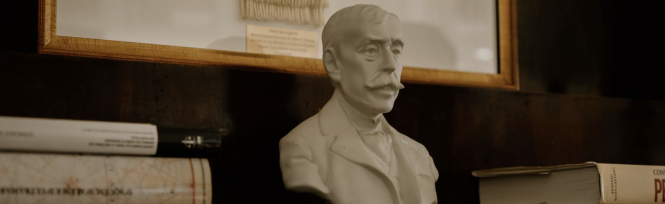
Between the city and the countryside, the chronicle of a nation on the verge of modernity was born
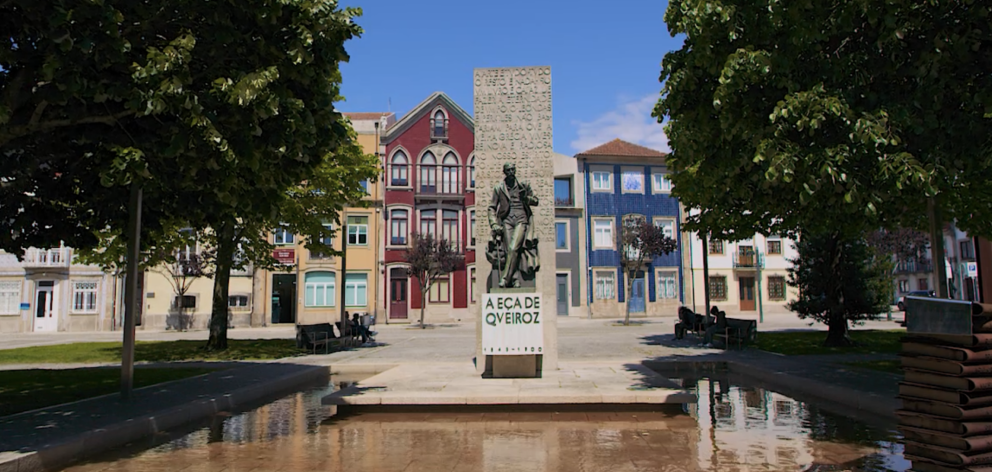
Discover the places that were part of Eça de Queiroz’s social and cultural life and were immortalised in many of his works
Chronicle of As Farpas
“Concise and full of humour, this short text shows how simplicity can be the best approach for anyone who wants to write well.”
This is entirely indisputable.
Everyone agrees on that.
However, what opinion radically disagrees about is the place where the Brazilian emperor visited the Portuguese historian.
The Diário de Notícias says that the emperor went to Mr. Herculano's mansion.
The Diário Popular asserts that the emperor went to Mr. Etc's retreat.
Mr. Silva Túlio declares that the emperor went to Herculano's hovel
(although a few lines later he contradicts himself, saying that the emperor was in the illustrious historian's thebaid, which...).
A letter to the Porto newspaper claims that the emperor went to the great man's sheepfold, etc.
Another maintains that the emperor went to the shelter of this one who…
Other Lisbon newspapers teach that His Majesty went to the hostel of that one who…
Another exclaims that His Majesty went into the solitude of the eminent figure who…
Another recounts that the emperor went into the exile of the venerable citizen who…
Now, amidst all this, one thing strikes us terribly:
His Majesty seems to have forgotten simply to go to the house of Mr. Alexandre Herculano!”
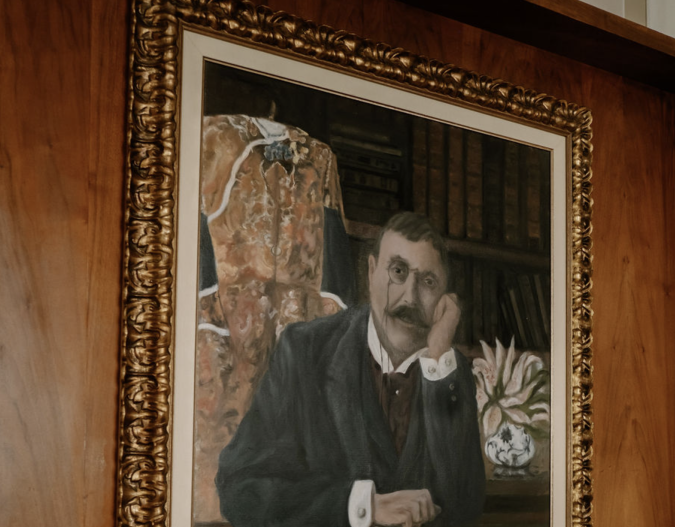
Tour
Discover the living settings that inspired the writing of Eça de Queiroz and explore the places where criticism, irony, and the keen eye of the Portuguese novelist took on a timeless form.
Póvoa de VarzimDouroAveiroCoimbraLisbonIn the Footsteps ofEça de Queiroz
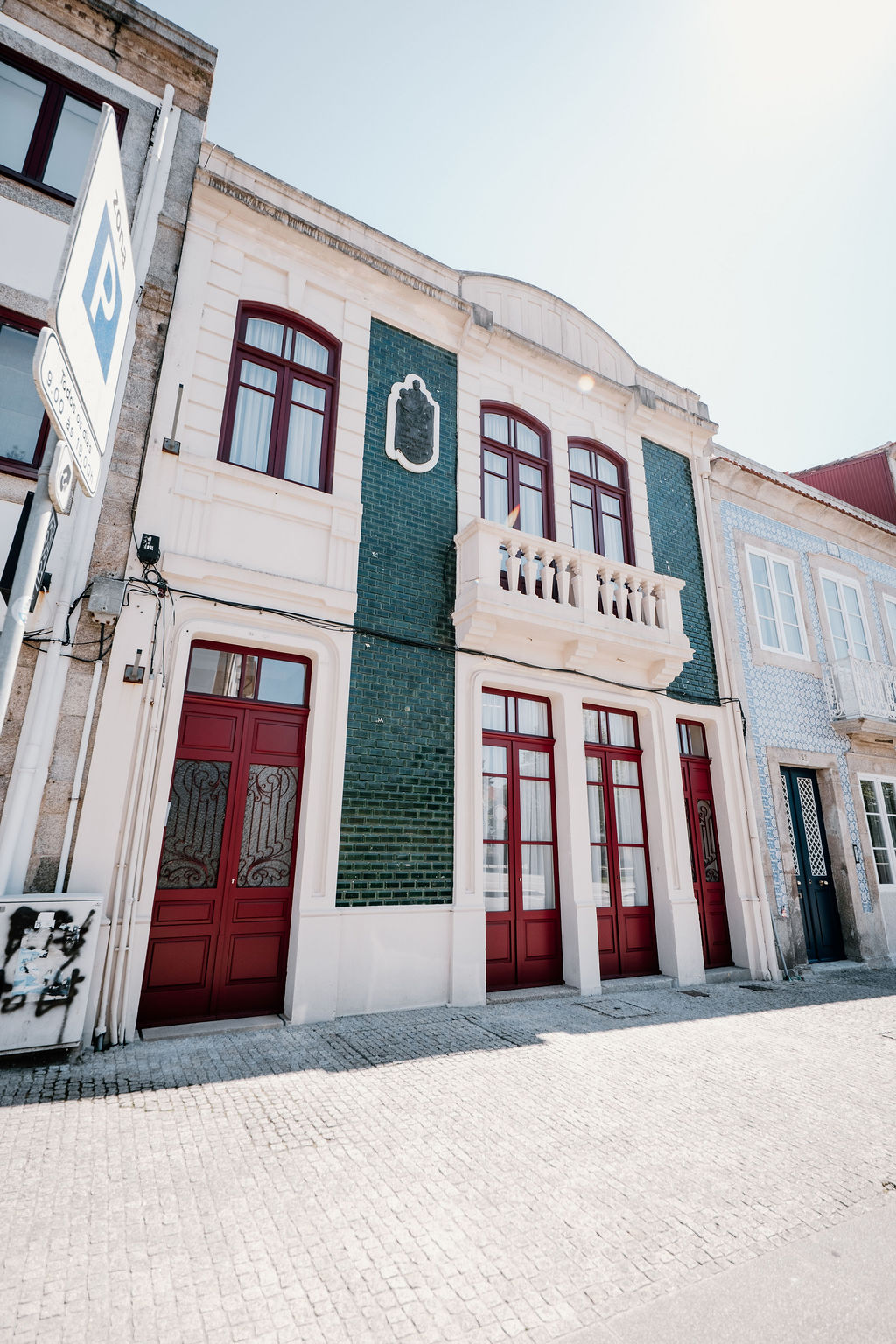
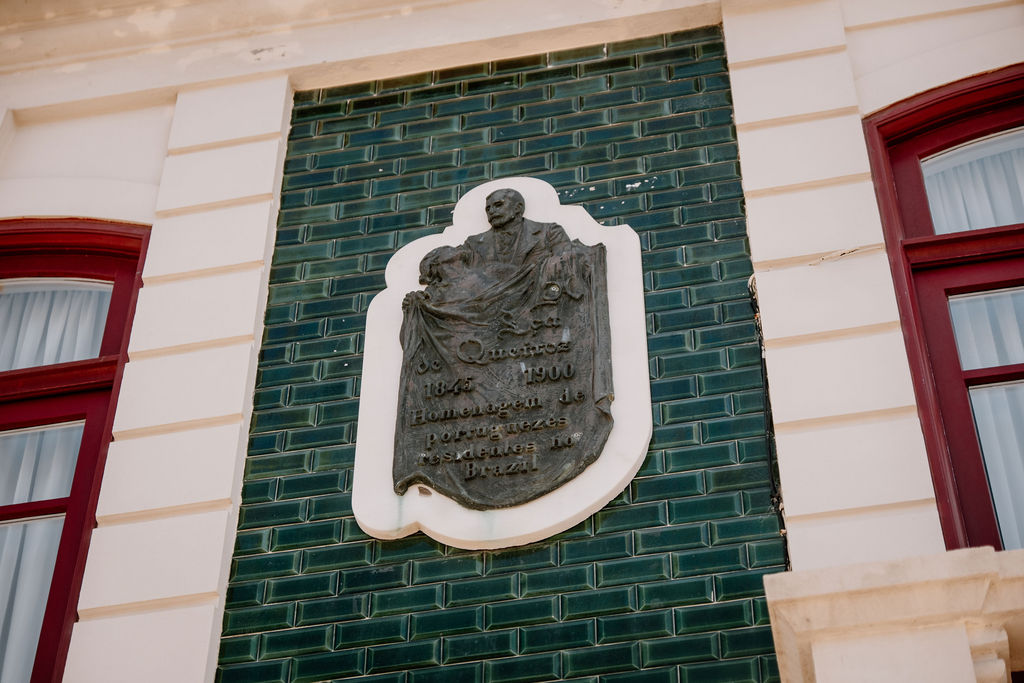
José Maria Eça de Queiroz was born on 25 November 1845 at what was then number 1, Almada Square — a house that now borders Largo Eça de Queiroz (formerly Largo de São Sebastião). Although the building where the author of Os Maias and A Cidade e as Serras was born cannot be visited, it bears a bronze plaque designed by Master Teixeira Lopes, offered by the Portuguese community in Brazil to commemorate the writer’s birth. The plaque was unveiled in 1906 during a public ceremony that drew crowds to the streets. In 1952, on the eastern side of the square, a monument to the writer was erected, featuring a sculpture by Leopoldo de Almeida.
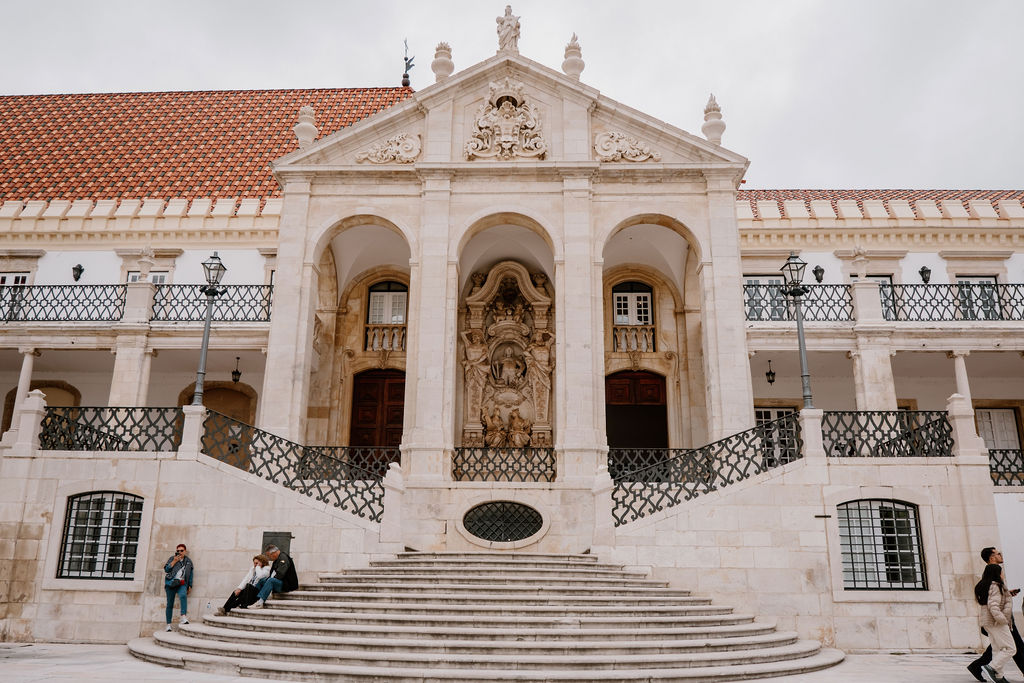
On 14 October 1861, Eça de Queiroz enrolled at the Faculty of Law of the University of Coimbra, where he met figures such as Antero de Quental and Teófilo Braga, becoming part of the famous “Generation of 1870”. He graduated in Law in 1866 and began a brief career as a lawyer before devoting himself to journalism and writing. Descriptions of the Faculty and the city’s streets would later appear in several of his novels, including O Conde de Abranhos, Primo Basílio, A Ilustre Casa de Ramires, O Crime do Padre Amaro and A Cidade e as Serras. Founded in 1290 by King Dinis and permanently transferred to Coimbra in 1537, the University of Coimbra is the oldest university in Portugal. One of its highlights is the Paço das Escolas, a former Islamic citadel that became a Royal Palace in the 12th century and the seat of the University in 1544. Its entrance, the Porta Férrea, is a striking example of the close relationship between the University and royal power. Within the Paço are the Sala dos Grandes Atos, the former Throne Room, which today hosts major events in academic life; the Capela de São Miguel; and the Biblioteca Joanina, the finest example of Portuguese Baroque architecture. Built during the reign of King João V and considered one of Europe’s richest libraries, its interior is lined with exotic-wood bookcases holding around 60,000 volumes dating from the 16th to the 18th centuries, covering a wide range of subjects and still available for consultation today. Among them is the matriculation register containing Eça de Queiroz’s entry.
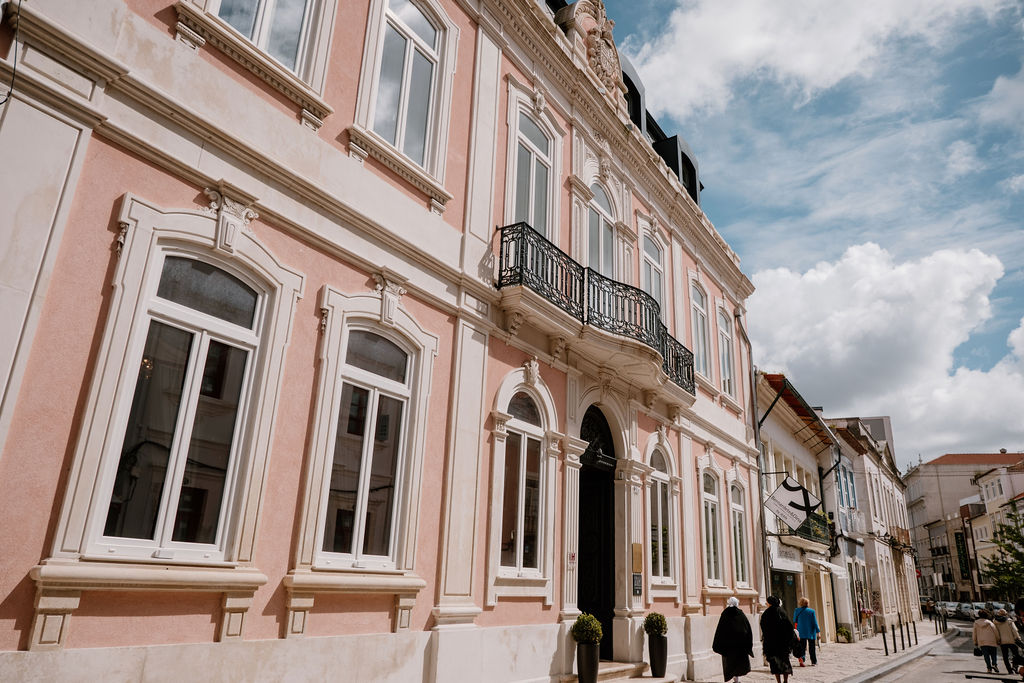
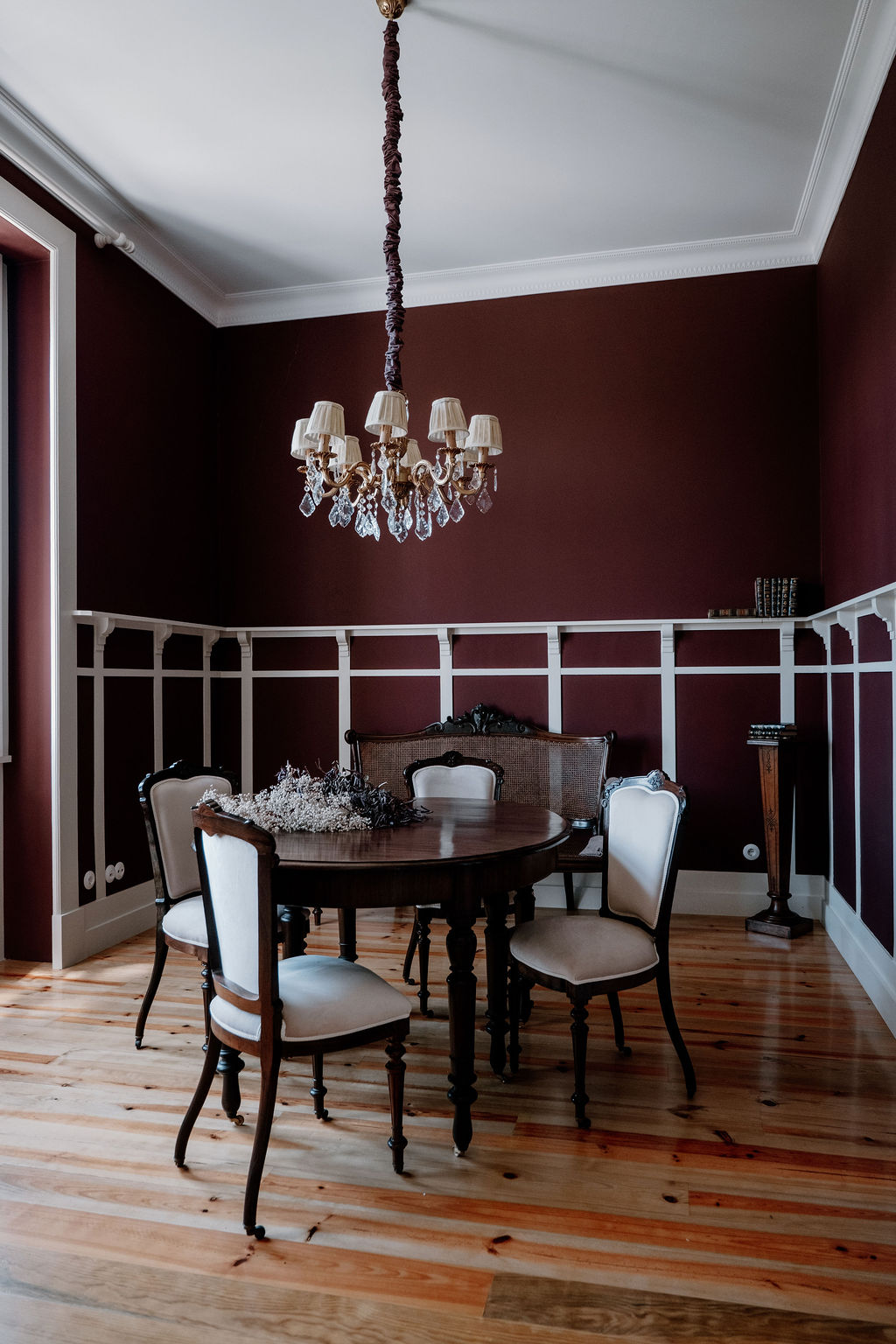
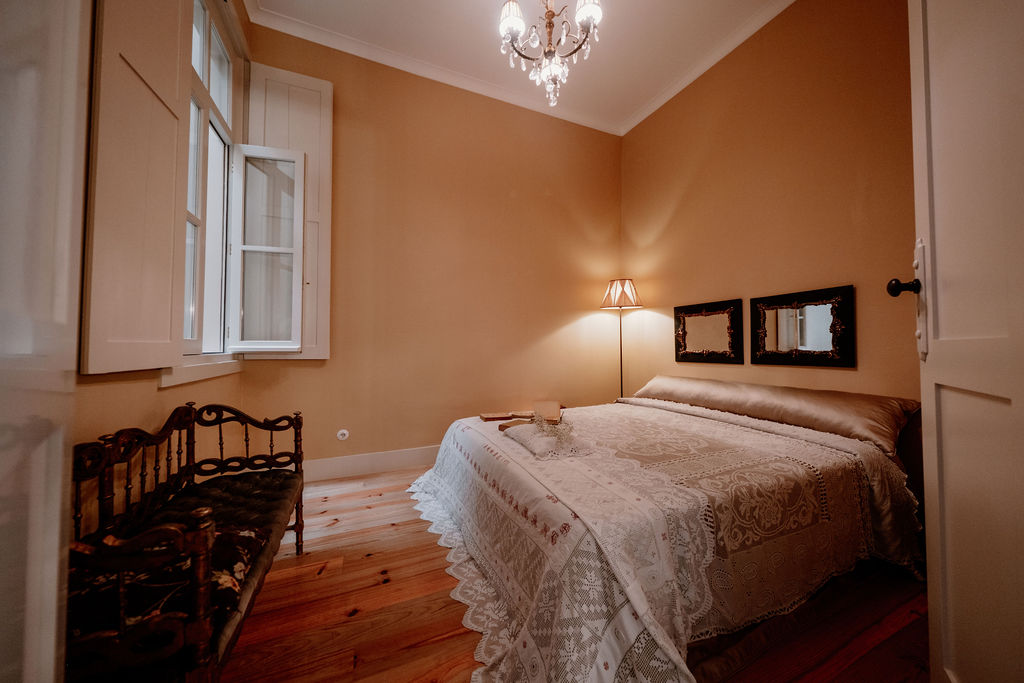
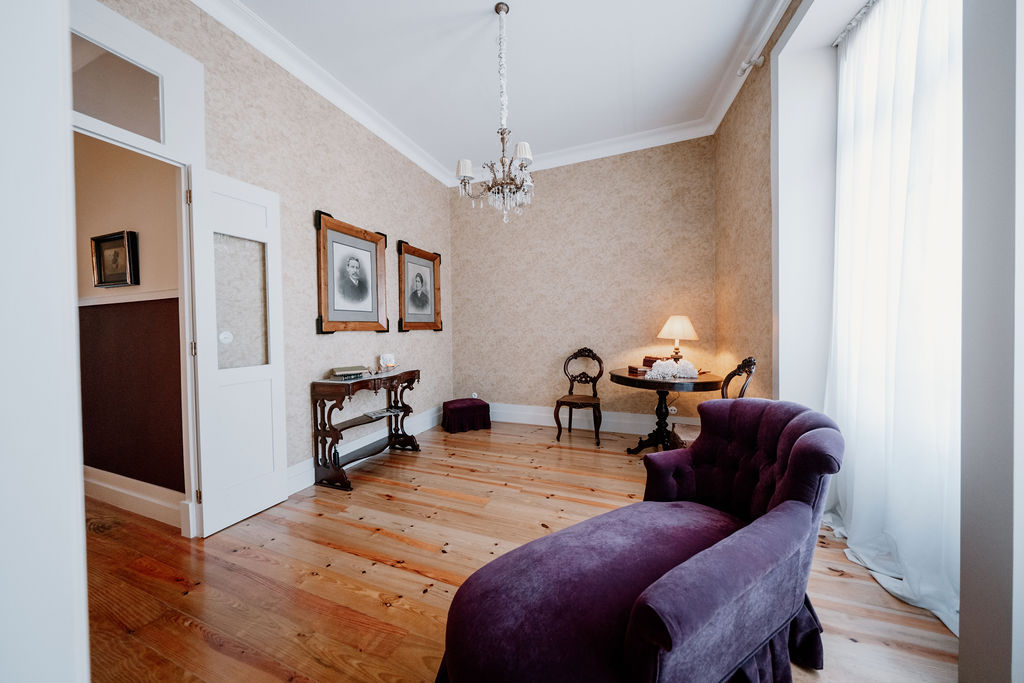
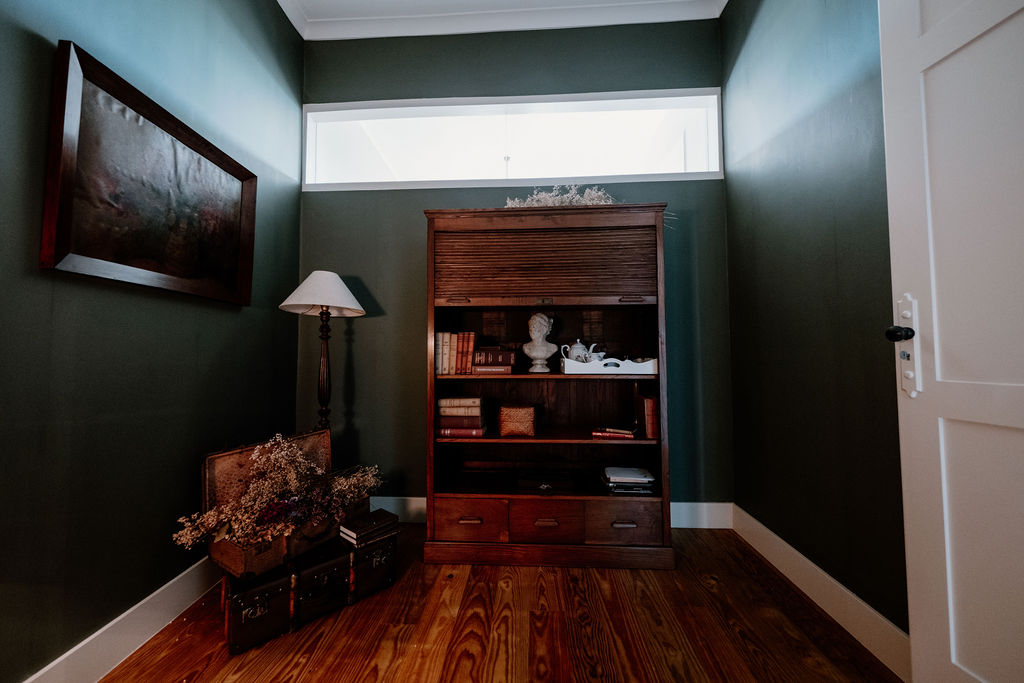
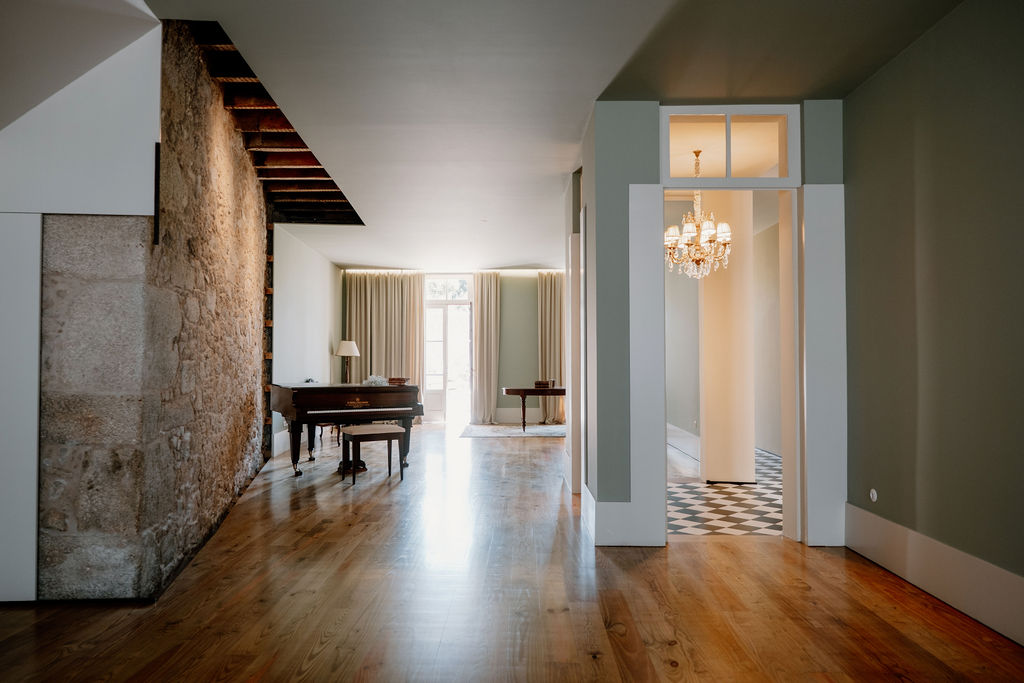
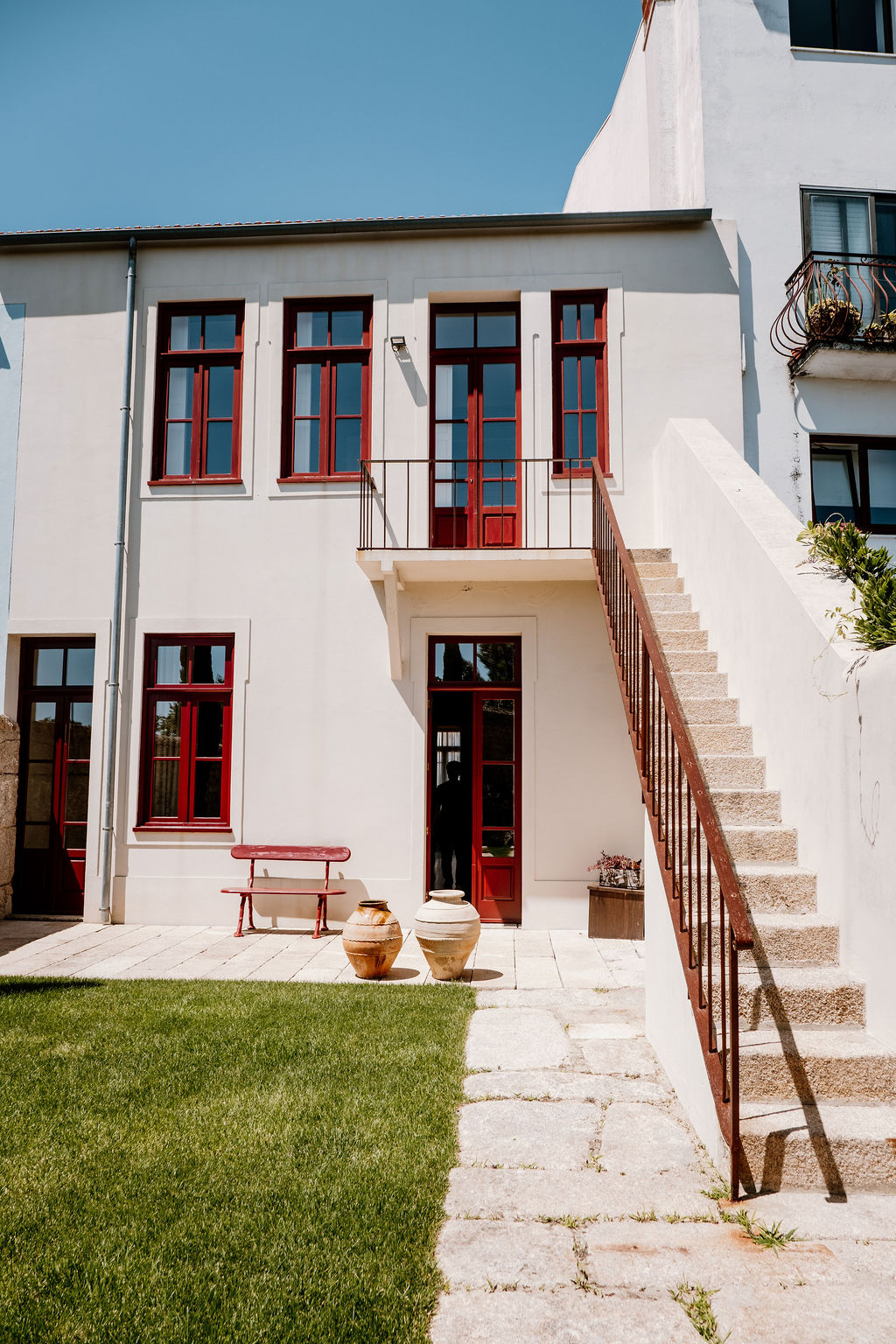
Inaugurated in September 2023 at number 50, Rua José Estêvão, in Aveiro, where the residence of Eça de Queiroz’s father and family once stood, the MS Collection – Palacete Valdemouro is a five-star hotel whose rooms are inspired by characters from Eça de Queiroz’s works, such as Carlos da Maia, Father Amaro and Luísa de Brito, and decorated with items from the period in which the writer produced his works, acquired at auction. The reading room contains photographs, letters, fountain pens and even the monocle belonging to the collection of the Eça de Queiroz Foundation, with which the hotel has established a partnership. In the garden, alongside books available for visitors to read, stands Vhils’s work Essa é que é Eça. Aveiro also held a special significance for Eça, as he would spend his holidays at Costa Nova beach, which he described as “um dos sítios mais deliciosos do globo” (one of the most delightful places in the world), as attested by the contents of a letter now reproduced on a tile panel on the wall of the Palheiro de José Estêvão, one of the famous colourfully striped houses typical of the beach. The house belonged to the father of one of his close friends, the politician and minister Luís de Magalhães.
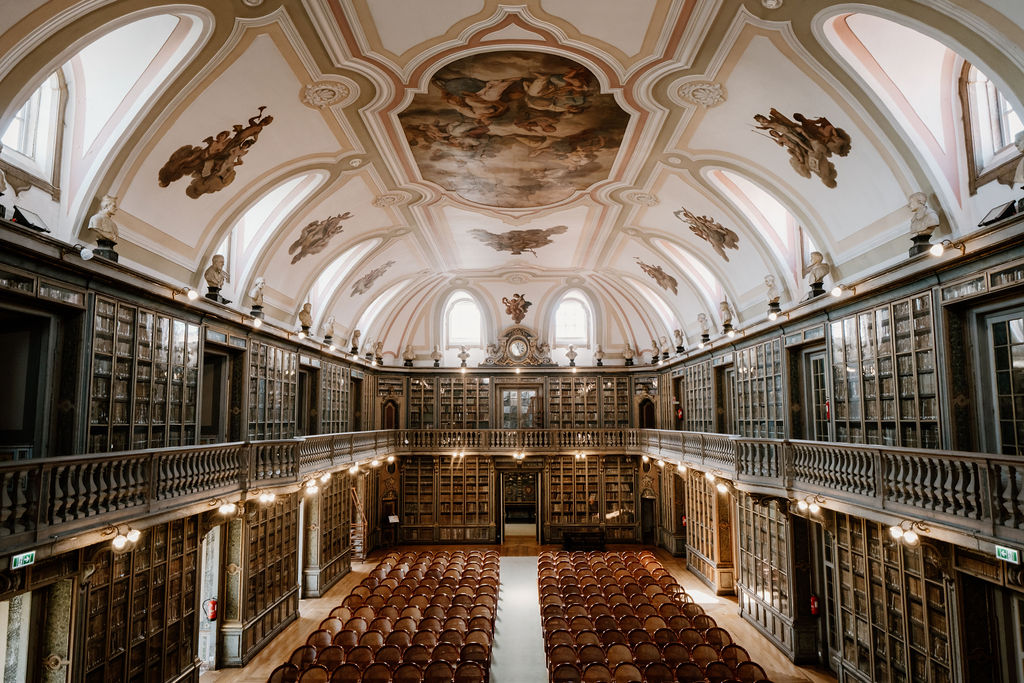
Founded in 1779 in the former Convent of Nossa Senhora de Jesus, the Lisbon Academy of Sciences is one of Portugal’s oldest scientific institutions, continuously operating for over 246 years. It promotes, preserves, and disseminates knowledge in the sciences and humanities. From the books lining the Grand Hall to the museum, library, and archive, every room holds intellectual memory and the legacy of those who devoted their lives to knowledge. In 1883, Eça de Queiroz was named a corresponding member of the Royal Academy of Sciences. In the cloister, you can find a tiled panel featuring his bust.
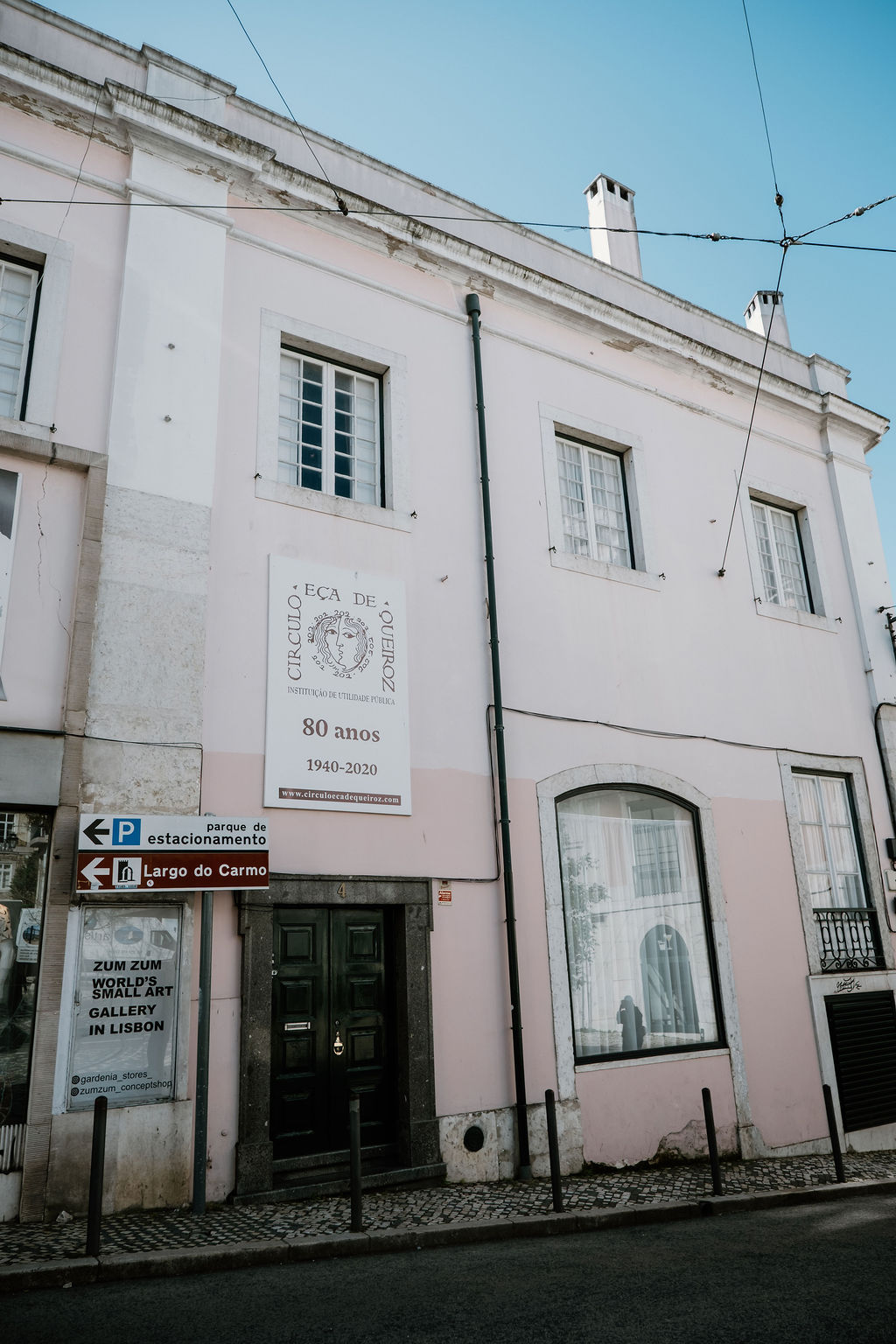
Founded in 1940 at the initiative of António Ferro, the Eça de Queiroz Circle is an institution dedicated to culture, the arts and intellectual debate. Located in Largo Rafael Bordalo Pinheiro, in the heart of Chiado, and inspired by Eça’s legacy, this exclusive club has a fixed membership of 202 — a reference to the fictional palace on the Champs-Élysées where Jacinto, the protagonist of A Cidade e as Serras, lived. The original iron-plated door numbered “202” is still preserved inside. A place of exchange and reflection, the Circle hosts lectures, exhibitions, and concerts, with past guests including Nobel laureates Maurice Maeterlinck and T. S. Eliot, as well as Graham Greene, Ortega y Gasset, Gregorio Marañón and Gabriel Marcel.
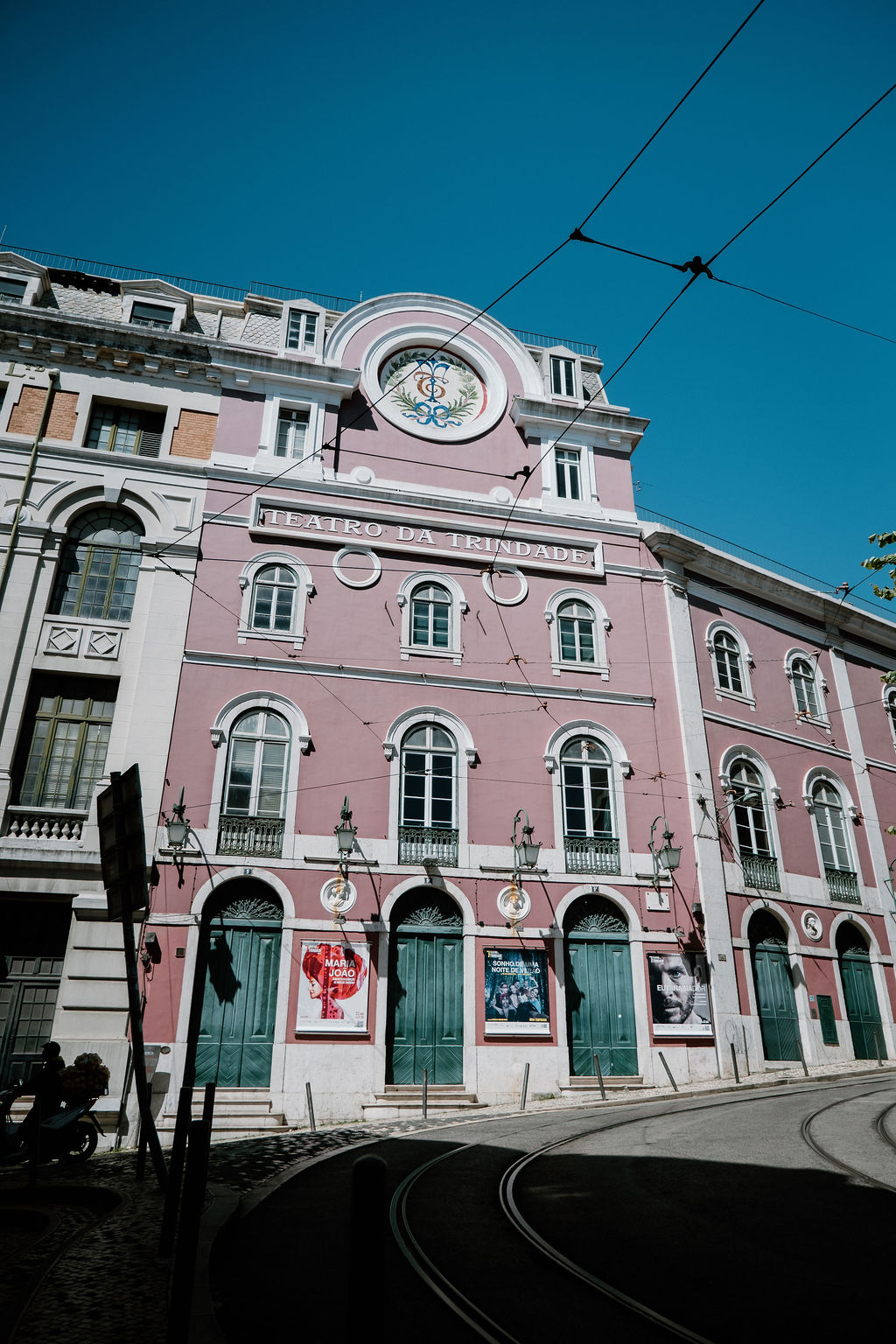
Still a prestigious cultural venue today, the Trindade Theatre opened in November 1867, founded by playwright, poet, and impresario Francisco Pereira Palha. It quickly became a favourite among Lisbon’s wealthy bourgeoisie, who flocked to its shows and soirées in Chiado. With a performance hall, restaurant-bar, billiard room, and the renowned Trindade Salon — which could be converted into a ballroom — the theatre was considered Lisbon’s most modern, Parisian-style venue of its time. It was in the Trindade Salon that, in 1888, Eça de Queiroz set one of the scenes in Os Maias — the gala — likely inspired by events held there, such as the presentation of Edison’s phonograph or explorer Serpa Pinto’s lectures on Africa.
Os Maias, as well as many other works by Eça, can be found, translated into a wide variety of languages, just a few streets down at the world’s oldest bookshop still in operation, Bertrand in Chiado, in a room devoted exclusively to the writer.
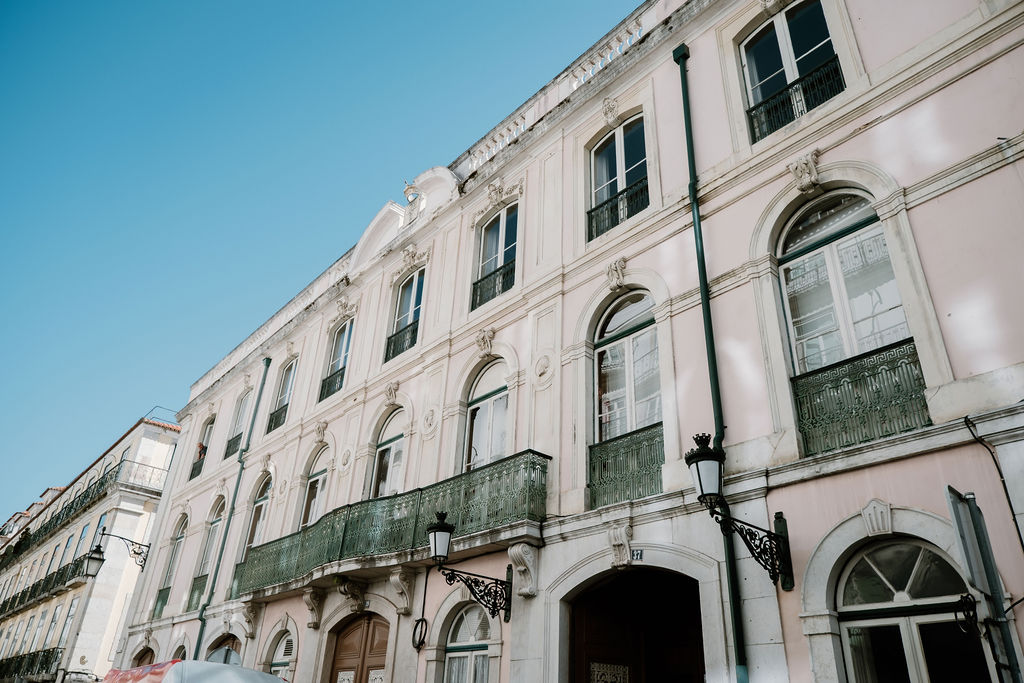
Created by royal charter from Queen Maria II in 1846, the Literary Guild was founded by major figures of Portuguese Romanticism — historian Alexandre Herculano (member No. 1) and poet-playwright Almeida Garrett — alongside other liberal politicians and writers. After several relocations, it settled in 1875 in the palatial residence of the Viscount of Loures on Rua Ivens (formerly Rua de São Francisco), where it remains today. Its salons, library, garden, and iconic reading room were frequented by generations of members. References to the Grémio appear in the works of numerous authors — including Eça de Queiroz, who was the 19th registered member. Eça often spent long hours there reading newspapers and French magazines — and no doubt observing the characters who would populate his fiction. In Os Maias, for example, the Cruges family’s building, where Maria Eduarda lived on the first floor, is said to be just “quatro portas adiante o Grémio” (four doors ahead, the Grémio), on what was then Rua de São Francisco.
Eça himself lived near this street, on the fourth floor of no. 26 Praça Dom Pedro IV, better known as Rossio, just above the still-existing Café Nicola. The house, where he moved at the age of 21 and which would later inspire the consulting room of Carlos Eduardo da Maia, belonged to his parents. Today, on the building’s façade, a commemorative plaque recalls the writer’s time at this address.
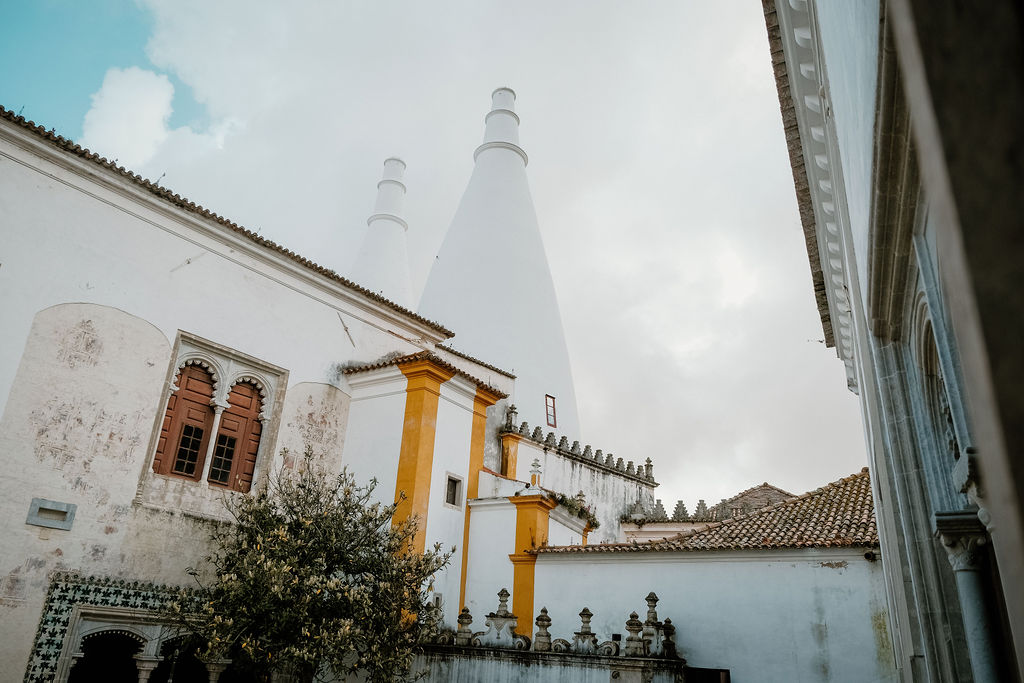
In Os Maias, Eça de Queiroz’s most celebrated novel — subtitled Episódios da Vida Romântica — several crucial scenes take place in Sintra, the quintessentially romantic town where, in the author’s words, “Não há um cantinho que não seja um poema” (there is not a single corner that is not a poem). The Palácio da Vila, one of the town’s most iconic buildings and the best-preserved example of Portuguese medieval royal architecture, is described in the novel with the author’s characteristic irony. He portrays it as “a massive and silent palace […] patriarchally settled among the village houses, with its beautiful Manueline windows […] and above them the two colossal, misshapen chimneys, summing up the whole building, as if that residence were nothing but a kitchen scaled to the appetite of a king who devours a kingdom a day…”. The Lawrence Hotel, considered the oldest hotel in Portugal (opened in 1780), hosted both Lord Byron and Eça himself. It is also where Maria Eduarda stays in Os Maias and appears in A Tragédia da Rua das Flores and Alves & C.ª.
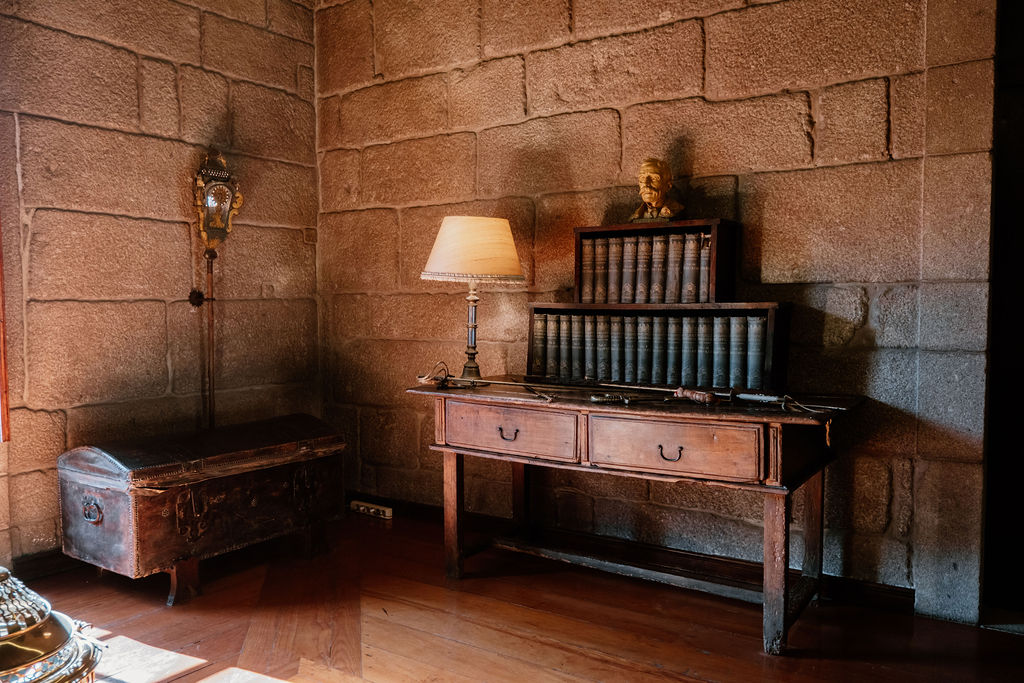
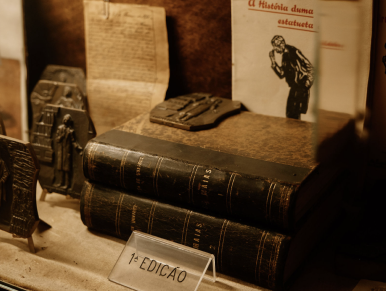
Located in the Casa de Tormes in Santa Cruz do Douro, the Eça de Queiroz Foundation has, since 1990, been dedicated to promoting the author’s life and legacy, both nationally and internationally. This house, which inspired the noble residence of Jacinto — the main character in A Cidade e as Serras — is now home to a museum devoted to the writer’s life and work. Visitors to the Casa de Tormes can see the desk where Eça used to write (standing), his inkwells, his famous pince-nez glasses, photographs with family and friends, a painting gifted by King Carlos I, the table where the writer had his first meal in Tormes, and various first editions — including one of Os Maias. Nature lovers can also explore O Caminho de Jacinto, a 3 km linear walking trail linking the Aregos (Tormes) train station to the Foundation, offering views of valleys, woods, orchards, streams and moss-covered rocks.
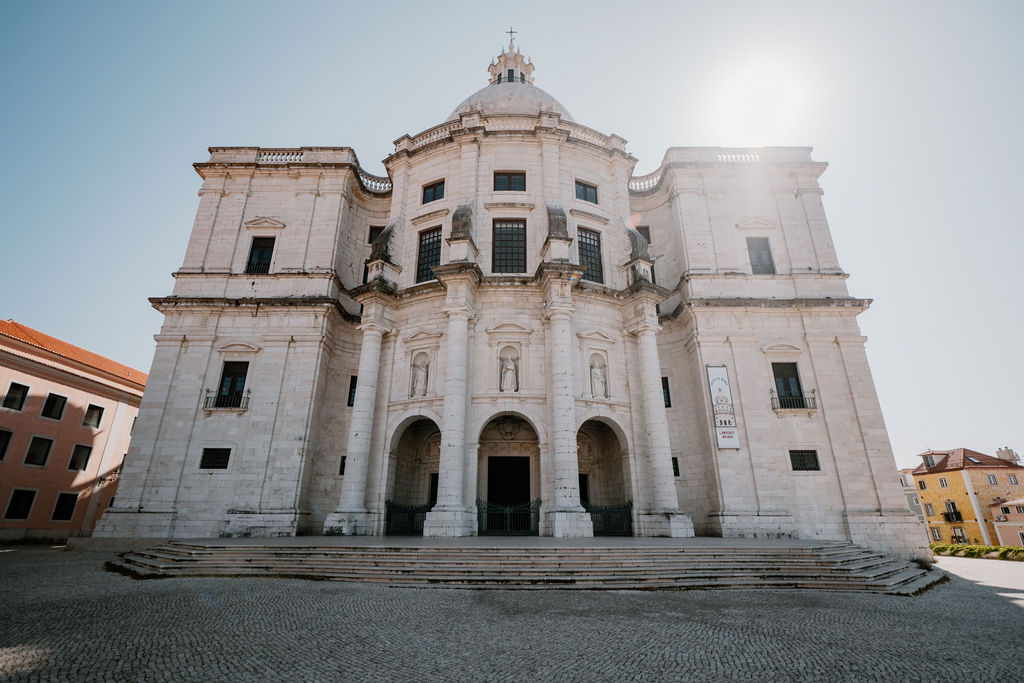
On 8 January 2025, the mortal remains of Eça de Queiroz were transferred from the tomb in Santa Cruz do Douro, where they had rested since 1989, to the National Pantheon. This transfer required the opening of the last available room, leaving only three further places. The ceremony granting Eça de Queiroz the honours of the Pantheon included speeches by his great-great-grandson, Afonso Reis Cabral, himself a writer, who delivered the eulogy; the President of the Assembly of the Republic, José Pedro Aguiar-Branco; and the President of the Republic, Marcelo Rebelo de Sousa. Located in the historic district of Santa Clara, the National Pantheon occupies the building originally intended as the Church of Santa Engrácia. Although it was first built in the 16th century and completely rebuilt at the end of the 17th century, it remained without a roof until the 1960s, when the Estado Novo regime decided to complete it and convert it into the Pantheon, which was inaugurated in 1966 on the occasion of the 40th anniversary of the Estado Novo.
PRAÇA DO ALMADA HOUSE (PÓVOA DE VARZIM)
José Maria Eça de Queiroz was born on 25 November 1845 at what was then number 1, Almada Square — a house that now borders Largo Eça de Queiroz (formerly Largo de São Sebastião). Although the building where the author of Os Maias and A Cidade e as Serras was born cannot be visited, it bears a bronze plaque designed by Master Teixeira Lopes, offered by the Portuguese community in Brazil to commemorate the writer’s birth. The plaque was unveiled in 1906 during a public ceremony that drew crowds to the streets. In 1952, on the eastern side of the square, a monument to the writer was erected, featuring a sculpture by Leopoldo de Almeida.
PRAÇA DO ALMADA HOUSE (PÓVOA DE VARZIM)
Façade of the house at Praça do Almada


With Talk2me, you can interact with the places, ask for recommendations on nearby attractions to visit, and discover fascinating details that will transform your trip